

Wearable Medical Devices Market Projected to Reach USD 523.58 Billion, Growing at a 25.57% CAGR by 2035
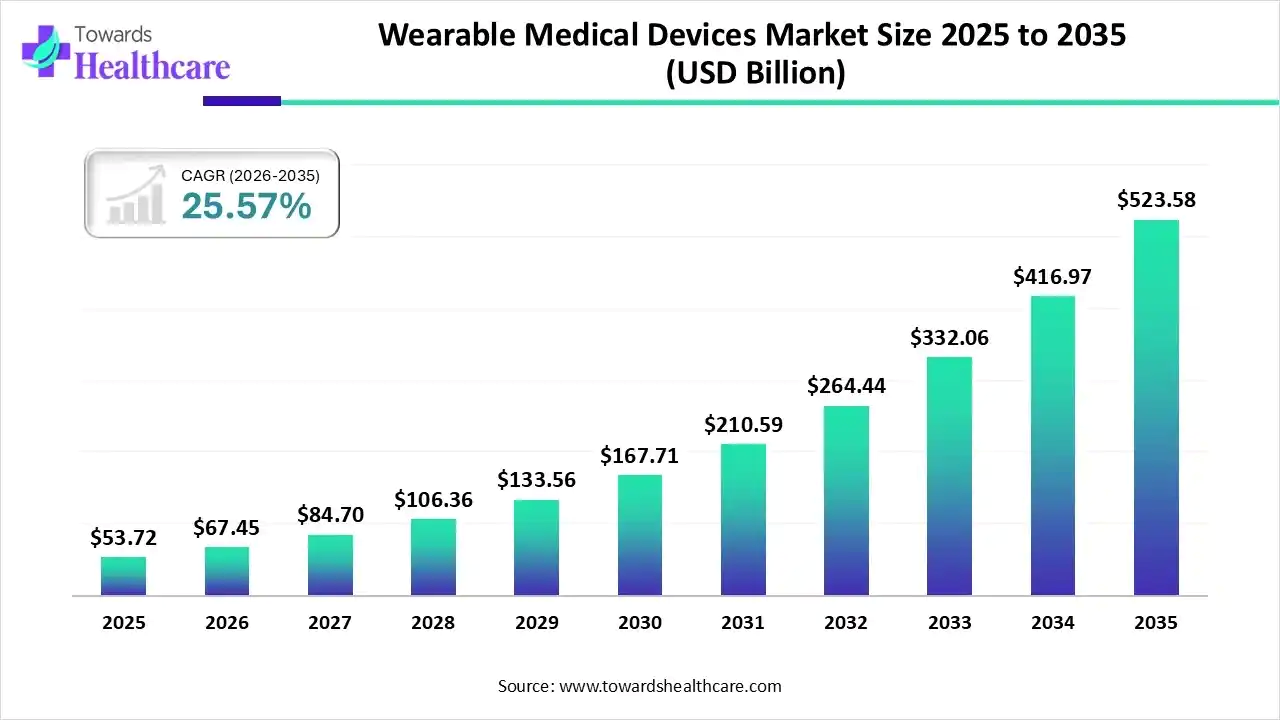
The global wearable medical devices market size was valued at USD 53.72 billion in 2025 and is predicted to hit around USD 523.58 billion by 2035, rising at a 25.57% CAGR, a study published by Towards Healthcare a sister firm of Precedence Research.
Ottawa, Feb. 10, 2026 (GLOBE NEWSWIRE) -- The global wearable medical devices market size is calculated at USD 67.45 billion in 2026 and is expected to reach around USD 523.58 billion by 2035, growing at a CAGR of 25.57% for the forecasted period.
The Complete Study is Now Available for Immediate Access | Download the Sample Pages of this Report @ https://www.towardshealthcare.com/download-sample/5613
Key Takeaways
- North America accounted for the largest share of the strategic wearable medical devices market in 2025.
- Asia Pacific is expected to grow at the fastest CAGR in the studied years.
- By product type, the diagnostic devices segment registered dominance in the market in 2025.
- By product type, the therapeutic device segment is expected to grow at a notable CAGR in the market during the forecast period.
- By site type, the strap/clip/bracelet segment dominated the market and is expected to grow at a notable CAGR in the studied years.
- By site type, the shoe sensors segment is expected to grow at a significant rate in the market during the forecast period.
- By application type, the home healthcare segment led the market in 2025.
- By application type, the remote patient monitoring segment is expected to grow at the fastest CAGR in the market.
- By grade type, the consumer-grade wearable medical devices segment accounted for a considerable revenue share in the market in 2025.
- By grade type, the clinical grade wearable medical devices segment is expected to grow at the fastest CAGR in the market during the forecast period.
- By distribution channel type, the pharmacy segment held the largest market share in 2025.
- By distribution channel type, the online channel segment is expected to grow at the fastest CAGR in the market during the forecast period.
What are Strategic Wearable Medical Devices?
Strategic wearable medical devices are connected health technologies designed for continuous monitoring, data-driven insights, and protective management of medical conditions to support long-term healthcare decisions and outcomes. The strategic wearable medical devices market is increasing due to the rising prevalence of chronic diseases, growing demand for remote patient monitoring, and increased focus on preventive healthcare. Advancements in sensor technology, AI-driven analytics, and connectivity are improving data accuracy and clinical usefulness. Additionally, supportive regulatory frameworks, expanding digital health adoption, and increasing healthcare cost pressure are encouraging the integration of wearable devices into mainstream medical care.
What are the Key Drivers in the Strategic Wearable Medical Devices Market?
Major drivers of the market include increasing demand for continuous health monitoring, rising incidence of chronic and lifestyle-related diseases, and growing adoption of telemedicine and remote care. Technological advancements in sensors, AI, and wireless connectivity enhance device accuracy and usability. Additionally, supportive regulatory initiatives, increased healthcare digitization, and the need to reduce hospital visits and overall treatment costs are accelerating market growth.
You can place an order or ask any questions, please feel free to contact us at sales@towardshealthcare.com
What are the Ongoing Trends in the Strategic Wearable Medical Devices Market?
- In April 2025, UCLA Health initiated its first clinical trial to evaluate a wearable device that delivers gentle nerve stimulation during sleep to help reduce ADHD symptoms in children prenatally exposed to alcohol. The study is supported by a USD 350,000 grant from the National Institute on Alcohol Abuse and Alcoholism.
- In April 2025, Sonus Microsystems partnered with Providence Health Care Ventures under PHCV’s Innovation Program to advance the development, validation, and commercialization of Sonus’ wearable ultrasound technology for cardiac monitoring applications.
What is the Emerging Challenge in the Strategic Wearable Medical Devices Market?
An emerging challenge in the market is ensuring data accuracy, privacy, and cybersecurity while integrating devices into clinical workflows. Variability in regulatory requirements, limited interoperability with healthcare systems, and concern over long-term user adherence also create barriers to widespread adoption and scalable deployment across healthcare settings.
Regional Analysis
What Made North America Dominant in the Strategic Wearable Medical Devices Market in 2025?
North America dominated the strategic wearable devices market in 2025 due to advanced healthcare technologies and the strong presence of leading wearable and medical devices companies. High healthcare spencing favorable reimbursement policies, and growing demand for remote patient monitoring supported market leadership. Additionally, strong regulatory support, extensive clinical research activity, and widespread use of connected health solutions further strengthened the region’s dominance.
How did the Asia Pacific Expand At the Fastest Pace in the Market in 2025?
Asia Pacific expanded at the fastest pace in the strategic wearable medical devices market in 2025 due to rapid digital health adoption, large patient population, and increasing prevalence of chronic diseases. Rising healthcare investments, growing smartphone penetration, and improving internet connectivity supported wider use of wearable technologies. Additionally, supportive government initiatives, expanding telemedicine services, and increasing local manufacturing capabilities accelerated regional market growth.
Become a valued research partner with us - https://www.towardshealthcare.com/schedule-meeting
Segmental Insights
By Product Type Analysis
How did the Diagnostic Devices Segment Dominate the Strategic Wearable Medical Devices Market in 2025?
The diagnostic devices segment dominated the market in 2025 due to rising demand for continuous health monitoring and early disease detection. These devices enable real-time tracking of vital signs, support preventive care, and reduce hospital visits. Widespread use in managing chronic conditions, strong clinical adoption, and improved sensor accuracy further reinforced the market leadership.
The therapeutic device segment is expected to grow at a notable CAGR during the forecast period due to increasing adoption of non-invasive, wearable treatment solutions for chronic and neurological conditions. Advancements in stimulation technologies, rising demand for home-based therapies, and growing clinical evidence supporting therapeutic wearables are driving adoption. Additionally, improved patient compliance, regulatory approvals, and integration with digital health platforms are further accelerating market growth.
By Site Type Analysis
Why the Strap/clip/bracelet Segment Dominated the Strategic Wearable Medical Devices Market?
The strap/clip/bracelet segment dominated the strategic wearables, medical, and suitability market due to high user comfort, ease of wear, and suitability for continuous monitoring. These factors support long-term usage, improve patient compliance, and enable accurate data collection. Their compatibility with multiple diagnostic and therapeutic applications, along with widespread consumer familiarity and cost-effective manufacturing, further strengthened their market dominance.
The shoe sensors segment is expected to grow at a significant rate during the forecast period due to increasing demand for gait analysis, mobility assessment, and fall-risk monitoring. These sensors provide precise movement and pressure data, supporting applications in rehabilitation, elderly care, and chronic disease management. Rising adoption in sports medicine, growing awareness of preventive mobility health, and advancements in sensor miniaturization and wireless connectivity are further driving market growth.
By Application Type Analysis
How did the Home Healthcare Segment Dominate the Strategic Wearable Medical Devices Market in 2025?
The home healthcare segment dominated the market in 2025 due to growing preference for remote patient monitoring, convenience, and cost-effective care outside clinical settings. Wearable medical devices enabled continuous health tracking, reduced hospital visits, and improved chronic disease management at home. Increasing adoption of telehealth services, aging population, and rising healthcare costs further strengthened the dominance of home-based healthcare applications.
The remote patient monitoring segment is expected to grow at the fastest CAGR during the forecast period due to rising demand for continuous, real-time health tracking outside clinical settings. Increasing prevalence of chronic diseases, growing adoption of telemedicine, and the need to reduce hospital readmission are driving growth. Advances in connected wearables, data analytics, and supportive reimbursement policies further accelerate adoption across healthcare systems.
Get the latest insights on life science industry segmentation with our Annual Membership: https://www.towardshealthcare.com/get-an-annual-membership
By Grade Type Analysis
Why the Consumer-grade Wearable Medical Devices Segment Dominated the Strategic Wearable Medical Devices Market?
The consumer-grade wearable medical devices segment dominated the market due to widespread adoption for fitness tracking, wellness monitoring, and general health awareness. Affordable pricing, user-friendly designs, and easy accessibility through online and retail channels encourage mass-market use. Growing health consciousness, increasing smartphone integration, and rising demand for real-time personal health data further reinforced the dominance in 2025.
The clinical-grade wearable medical devices segment accounted for a considerable revenue share in 2025 due to its use in professional healthcare settings for accurate diagnosis, continuous monitoring, and treatment management. These devices meet stringent regulatory standards, provide reliable clinical data, and are widely adopted in hospitals, research, and remote patient monitoring programs. Their high precision and integration with healthcare systems supported a significant revenue contribution.
By Distribution Channel Type Analysis
How did the Pharmacy Segment Dominate the Strategic Wearable Medical Devices Market in 2025?
The pharmacy segment dominated the strategic wearable medical devices market in 2025 due to easy accessibility, widespread retail presence, and consumer trust in pharmacies for health-related products. Pharmacies facilitated both over-the-counter and prescription-based wearable devices, enabling convenient purchase and guidance. Growing awareness of preventive healthcare, integration with pharmacist-led patient support, and expanding pharmacy networks further strengthened the market dominance in the market.
The online channel segment is expected to grow at the fastest CAGR during the forecast period due to increasing e-commerce adoption, the convenience of home delivery, and wider product availability. Rising digital literacy, smartphone penetration, and growing consumer preference for contactless purchases are driving online sales. Additionally, manufacturers' direct-to-consumer strategies, online health platforms, and promotional campaigns are accelerating the growth of online distribution for wearable medical devices.
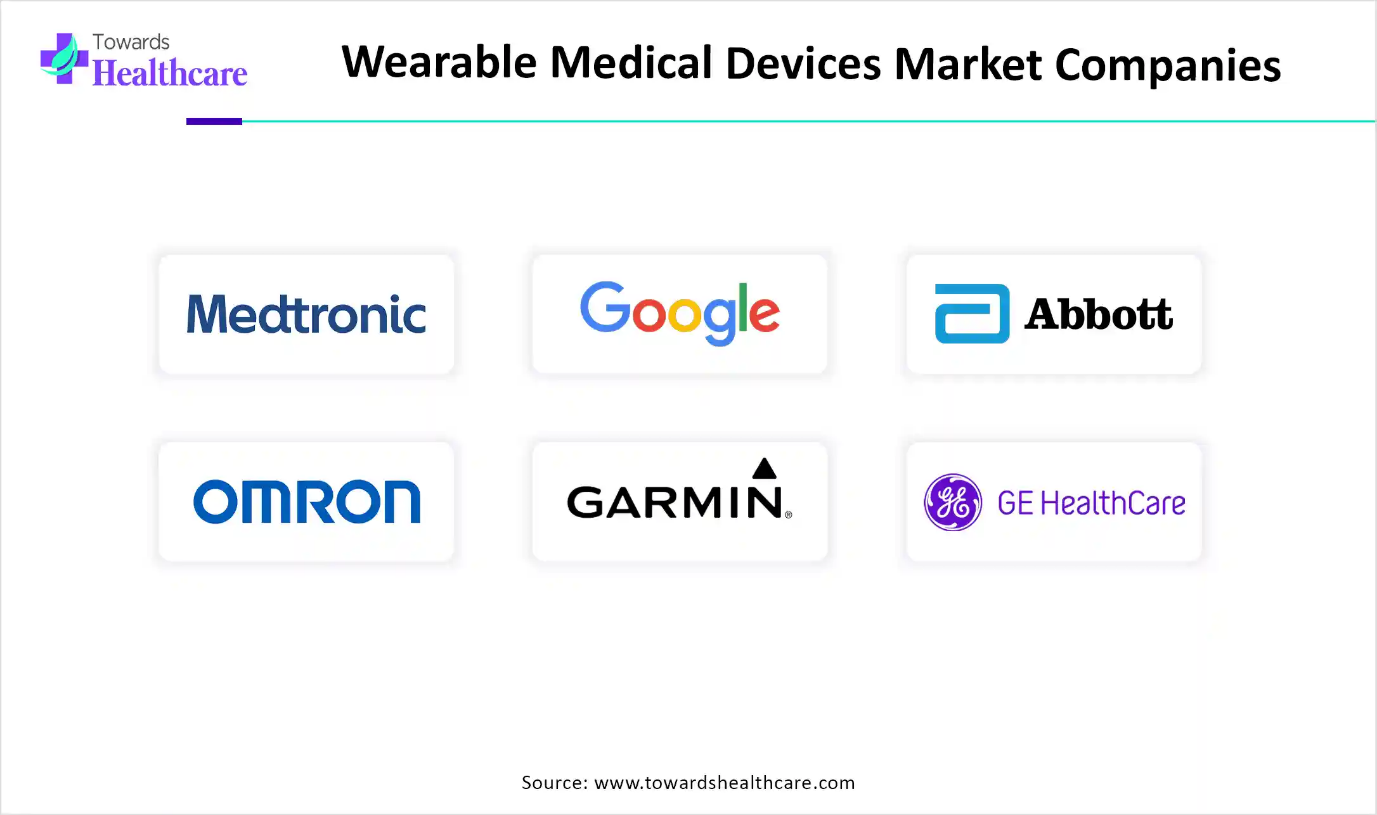
Wearable Medical Devices Market Key Players List
- Medtronic
- Abbott
- OMRON Healthcare, Inc.
- Koninklijke Philips N.V.
- Garmin Ltd
- GE HealthCare
- Fresenius Medical Care AG
- Insulet Corporation
- Dexcom, Inc.
- Tandem Diabetes Care, Inc
- VivaLNK, Inc.
- AliveCor, Inc.
- Cognita Labs
- EMAY
- Qardio, Inc
- Ypsomed AG
Browse More Insights of Towards Healthcare:
The AI imaging device market is on an upward trajectory, poised to generate substantial revenue growth, potentially climbing into the hundreds of millions over the forecast years from 2025 to 2034.
The global medical device testing market size was calculated at USD 10.77 billion in 2025 and is expected to reach around USD 26.62 billion by 2035, expanding at a CAGR of 9.47% from 2026 to 2035.
The global medical device CRO market size is calculated at USD 8.49 billion in 2024, grew to USD 9.25 billion in 2025, and is projected to reach around USD 19.9 billion by 2034. The market is expanding at a CAGR of 8.98% between 2025 and 2034.
The global medical device engineering market size was estimated at USD 9.96 billion in 2025 and is predicted to increase from USD 10.97 billion in 2026 to approximately USD 26.16 billion by 2035, expanding at a CAGR of 10.14% from 2026 to 2035.
The medical device CMO and CDMO market size was valued at US$ 48.39 billion in 2025 and is projected to grow to 52.57 billion in 2026. Forecasts suggest it will reach approximately US$ 110.82 billion by 2035, registering a CAGR of 8.64% during the period.
The global medical device outsourcing market size is calculated at US$ 180.59 billion in 2025, grew to US$ 203.43 billion in 2026, and is projected to reach around US$ 594.3 billion by 2035. The market is expanding at a CAGR of 12.65% between 2026 and 2035.
The drug-device combination products market size was estimated at US$ 150.3 billion in 2023 and is projected to grow to US$ 337.81 billion by 2034, rising at a compound annual growth rate (CAGR) of 7.64% from 2024 to 2034.
The Ventricular Assist Device (VAD) market size is projected to grow from USD 1.82 billion in 2025 to USD 3.38 billion by 2034, at a compound annual growth rate (CAGR) of 7.1%.
The global ambulatory blood pressure monitoring device market size was estimated at USD 1.56 billion in 2025 and is predicted to increase from USD 1.74 billion in 2026 to approximately USD 4.69 billion by 2035, expanding at a CAGR of 11.64% from 2026 to 2035.
The global hernia mesh device market size is calculated at USD 5.63 billion in 2024, grew to USD 6.02 billion in 2025, and is projected to reach around USD 11.01 billion by 2034. The market is expanding at a CAGR of 6.94% between 2025 and 2034.
Segments Covered in the Report
By Product
- Diagnostic Devices
- Vital Sign Monitoring Devices
- Heart Rate Monitors
- Activity Monitors
- Electrocardiographs
- Pulse Oximeters
- Spirometers
- Blood Pressure Monitors
- Others
- Sleep Monitoring Devices
- Sleep trackers
- Wrist Actigraphs
- Polysomnographs
- Others
- Electrocardiographs, Fetal And Obstetric Devices
- Neuromonitoring Devices
- Electroencephalographs
- Electromyographs
- Others
- Vital Sign Monitoring Devices
- Therapeutic Devices
- Pain Management Devices
- Neurostimulation Devices
- Others
- Insulin/Glucose Monitoring Devices
- Insulin Pumps
- Others
- Rehabilitation Devices
- Accelerometers
- Sensing Devices
- Ultrasound Platform
- Others
- Respiratory Therapy Devices
- Ventilators
- Positive Airway Pressure (PAP) Devices
- Portable Oxygen Concentrators
- Others
- Pain Management Devices
By Site
- Handheld
- Headband
- Strap/Clip/Bracelet
- Shoe Sensors
- Others
By Application
- Sports And Fitness
- Remote Patient Monitoring
- Home Healthcare
By Grade Type
- Consumer-Grade Wearable Medical Devices
- Clinical Wearable Medical Devices
By Distribution Channel
- Pharmacies
- Online Channel
- Hypermarkets
By Region
- North America
- U.S.
- Canada
- Europe
- UK
- Germany
- France
- Italy
- Spain
- Denmark
- Sweden
- Norway
- Asia Pacific
- Japan
- China
- India
- South Korea
- Australia
- Thailand
- Latin America
- Brazil
- Mexico
- Argentina
- Middle East & Africa
- South Africa
- Saudi Arabia
- UAE
- Kuwait
Immediate Delivery Available | Buy This Premium Research @ https://www.towardshealthcare.com/checkout/5613
Access our exclusive, data-rich dashboard dedicated to the healthcare market - built specifically for decision-makers, strategists, and industry leaders. The dashboard features comprehensive statistical data, segment-wise market breakdowns, regional performance shares, detailed company profiles, annual updates, and much more. From market sizing to competitive intelligence, this powerful tool is one-stop solution to your gateway.
Access the Dashboard: https://www.towardshealthcare.com/access-dashboard
About Us
Towards Healthcare is a leading global provider of technological solutions, clinical research services, and advanced analytics, with a strong emphasis on life science research. Dedicated to advancing innovation in the life sciences sector, we build strategic partnerships that generate actionable insights and transformative breakthroughs. As a global strategy consulting firm, we empower life science leaders to gain a competitive edge, drive research excellence, and accelerate sustainable growth.
You can place an order or ask any questions, please feel free to contact us at sales@towardshealthcare.com
Europe Region: +44 778 256 0738
North America Region: +1 8044 4193 44
APAC Region: +91 9356 9282 04
Web: https://www.towardshealthcare.com
Our Trusted Data Partners
Precedence Research | Towards Packaging | Towards Food and Beverages | Towards Chemical and Materials | Towards Dental | Towards EV Solutions | Healthcare Webwire
Find us on social platforms: LinkedIn | Twitter | Instagram | Medium | Pinterest
Read More:
https://www.towardshealthcare.com/insights/medical-device-gaskets-and-seals-market-sizing
https://www.towardshealthcare.com/insights/medical-device-contract-manufacturing-market-sizing
https://www.towardshealthcare.com/insights/pain-management-devices-market-sizing
https://www.towardshealthcare.com/insights/us-patient-monitoring-devices-market-sizing
https://www.towardshealthcare.com/insights/3d-printed-medical-devices-market
https://www.towardshealthcare.com/insights/electrosurgical-devices-market-sizing
https://www.towardshealthcare.com/insights/urology-devices-market-sizing
https://www.towardshealthcare.com/insights/anesthesia-devices-market-sizing
https://www.towardshealthcare.com/insights/standard-pen-needles-market-sizing
https://www.towardshealthcare.com/insights/neurovascular-and-coronary-devices-market-sizing


Legal Disclaimer:
EIN Presswire provides this news content "as is" without warranty of any kind. We do not accept any responsibility or liability for the accuracy, content, images, videos, licenses, completeness, legality, or reliability of the information contained in this article. If you have any complaints or copyright issues related to this article, kindly contact the author above.
